
Agentic AI: Meaning and Insights

The Next Frontier in Autonomous Intelligence

The artificial intelligence landscape is undergoing a revolutionary transformation. While traditional AI systems wait for prompts and follow predetermined paths, a new breed of intelligent systems is emerging—one that can think, plan, and act independently to achieve complex goals: We're entering the age of agentic AI.^1
An agentic AI can identify what an employee needs to do based on natural language queries and determine what it needs to do to help the employee achieve their goals. This is especially useful for tasks that require adaptability and multi-step problem solving like:
Rebooting a Virtual Machine, I tried this and works using Copilot Studio, see images:


The only thing the agent didn't do was to confirm I wanted to reboot the VM (EVEN when I specified it as a prerequisite) which is in Azure. Reason for which this may ability may take some time to be used in real data environments.
- Creating user accounts. Changing passwords. This can be done 100% done but first it does require governance and human oversight and rollback procedures before allowing a non trained and sanctioned entity to execute potentially disrupting actions on an environment
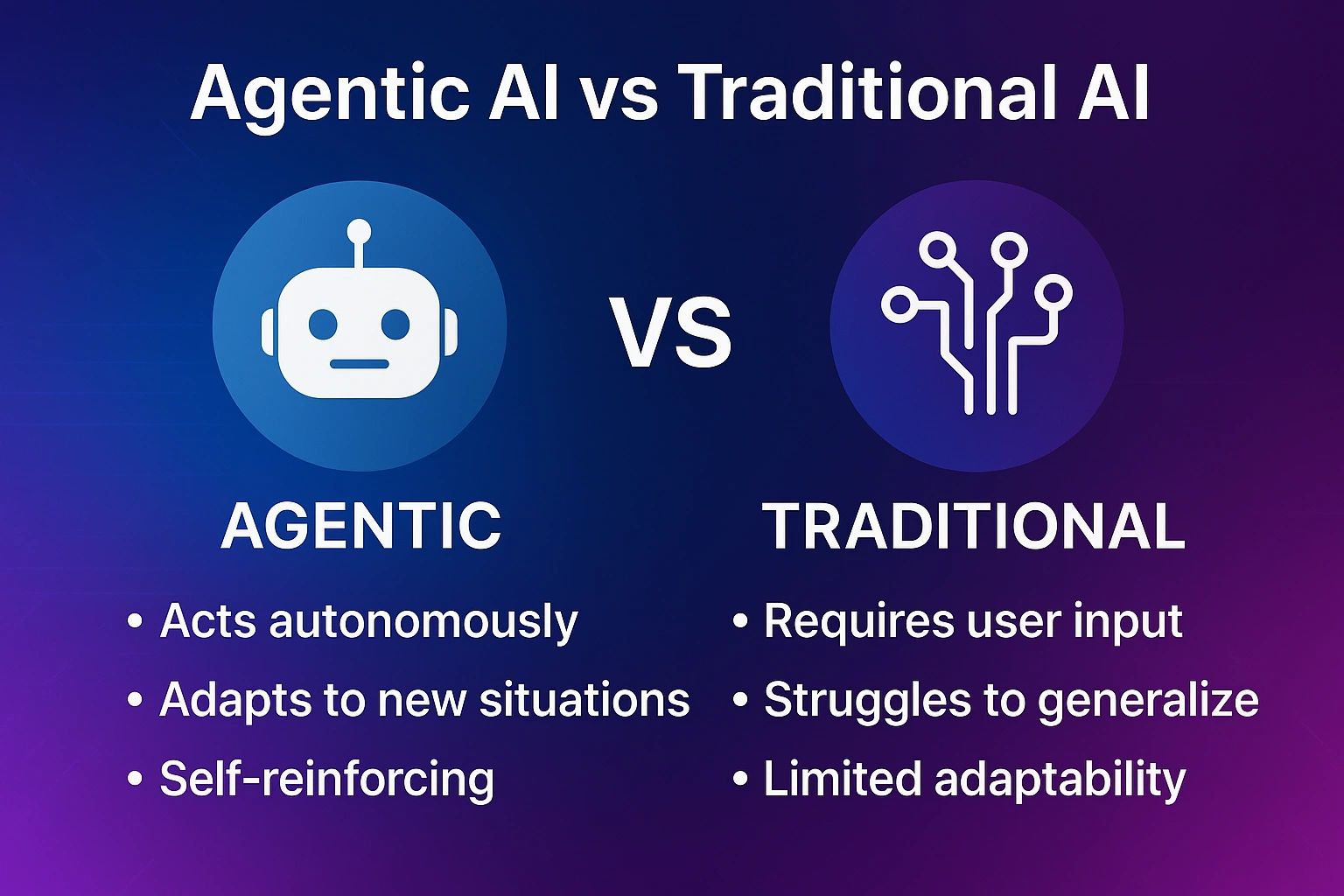
Agentic AI represents a fundamental shift from passive, reactive systems to autonomous agents that exhibit genuine agency—the ability to make independent decisions and take proactive actions to accomplish objectives.
Unlike traditional AI that merely responds to inputs, agentic AI systems can perceive their environment, reason about complex situations, and execute multi-step plans with minimal human oversight.^1^3
AI Systems Comparison: Traditional AI vs Software Agents vs Agentic AI
| Characteristic | Traditional AI | Software Agents | Agentic AI |
| Examples | Spam filters, image classifiers, recommendation engines | Chatbots, task schedulers, monitoring agents | AI assistants, autonomous developer agents, multi-agent LLM orchestrations |
| Execution Model | Batch or synchronous | Event-driven or scheduled | Asynchronous, event-driven, and goal-driven |
| Autonomy | Limited; often requires human or external orchestration | Medium; operates independently within predefined bounds | High; acts independently with adaptive strategies |
| Reactivity | Reactive to input data | Reactive to environment and events | Reactive and proactive; anticipates and initiates actions |
| Proactivity | Rare | Present in some systems | Core attribute; drives goal-directed behavior |
| Communication | Minimal; usually standalone or API-bound | Inter-agent or agent-human messaging | Rich multi-agent and human-in-the-loop interaction |
| Decision-making | Model inference only (classification, prediction, and so on) | Symbolic reasoning, or rule-based or scripted decisions | Contextual, goal-based, dynamic reasoning (often LLM-enhanced) |
| Delegated Intent | No; performs tasks defined directly by user | Partial; acts on behalf of users or systems that have limited scope | Yes; acts with delegated goals, often across services, users, or systems |
| Learning and Adaptation | Often model-centric (for example, ML training) | Sometimes adaptive | Embedded learning, memory, or reasoning (for example, feedback, self-correction) |
| Agency | None; tools for humans | Implicit or basic | Explicit; operates with purpose, goals, and self-direction |
| Context Awareness | Low; stateless or snapshot-based | Moderate; some state tracking | High; uses memory, situational context, and environment models |
| Infrastructure Role | Embedded in apps or analytics pipelines | Middleware or service layer component | Composable agent mesh integrated with cloud, serverless, or edge systems |
Understanding Agentic AI: Beyond Traditional Automation
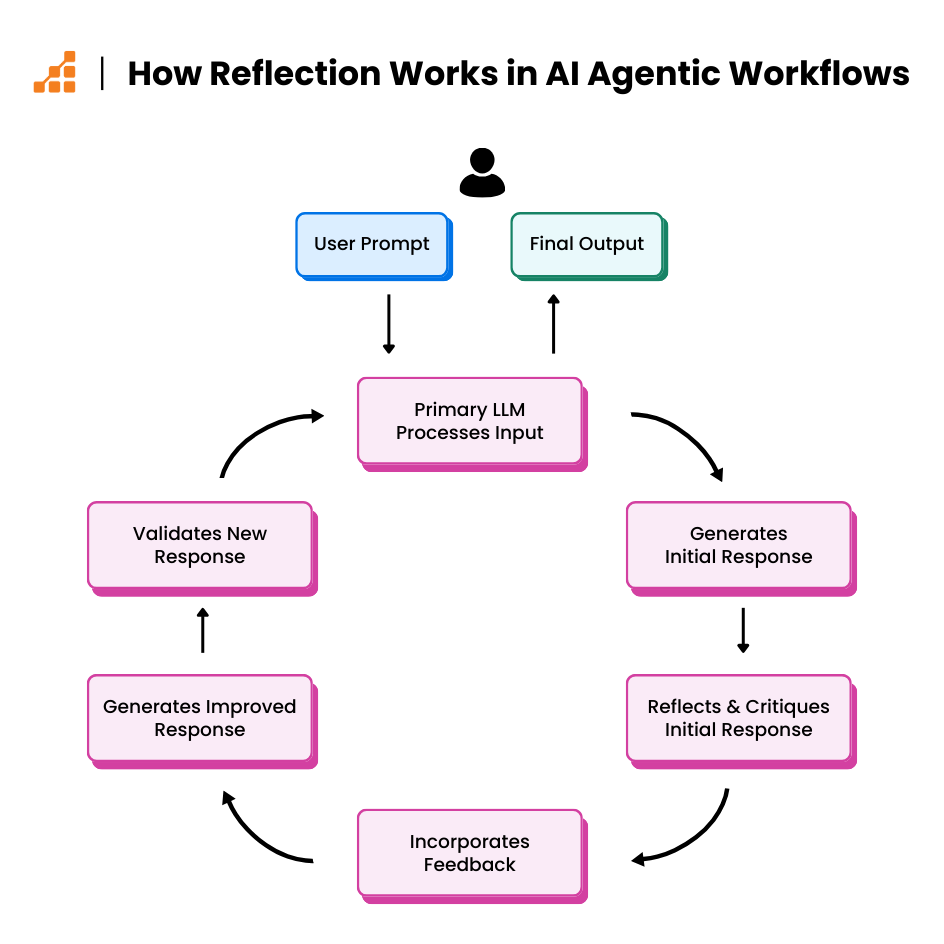
Flowchart illustrating reflection in AI agentic workflows, showing the iterative process of generating and improving responses via self-critique and feedback.
Agentic AI is an advanced form of artificial intelligence that combines autonomous decision-making with goal-directed behavior. These systems don't just process information or generate content—they actively pursue objectives through sophisticated planning, reasoning, and adaptive execution.^1^3
At its core, agentic AI systems possess four defining characteristics that distinguish them from conventional AI approaches:^5
Autonomous Decision-Making: Rather than following rigid rules or waiting for human input, agentic AI systems analyze situations independently and make contextual decisions based on their understanding of goals and environmental conditions.^1
Proactive Behavior: These systems anticipate needs and take initiative to address potential issues before they escalate, moving beyond reactive responses to proactive problem-solving.^6
Adaptive Learning: Agentic AI continuously learns from interactions and outcomes, refining its approach and improving performance over time without requiring manual updates.^5
Multi-Agent Collaboration: Advanced agentic systems coordinate multiple specialized agents, each focused on specific domains while working together toward broader organizational objectives.^2
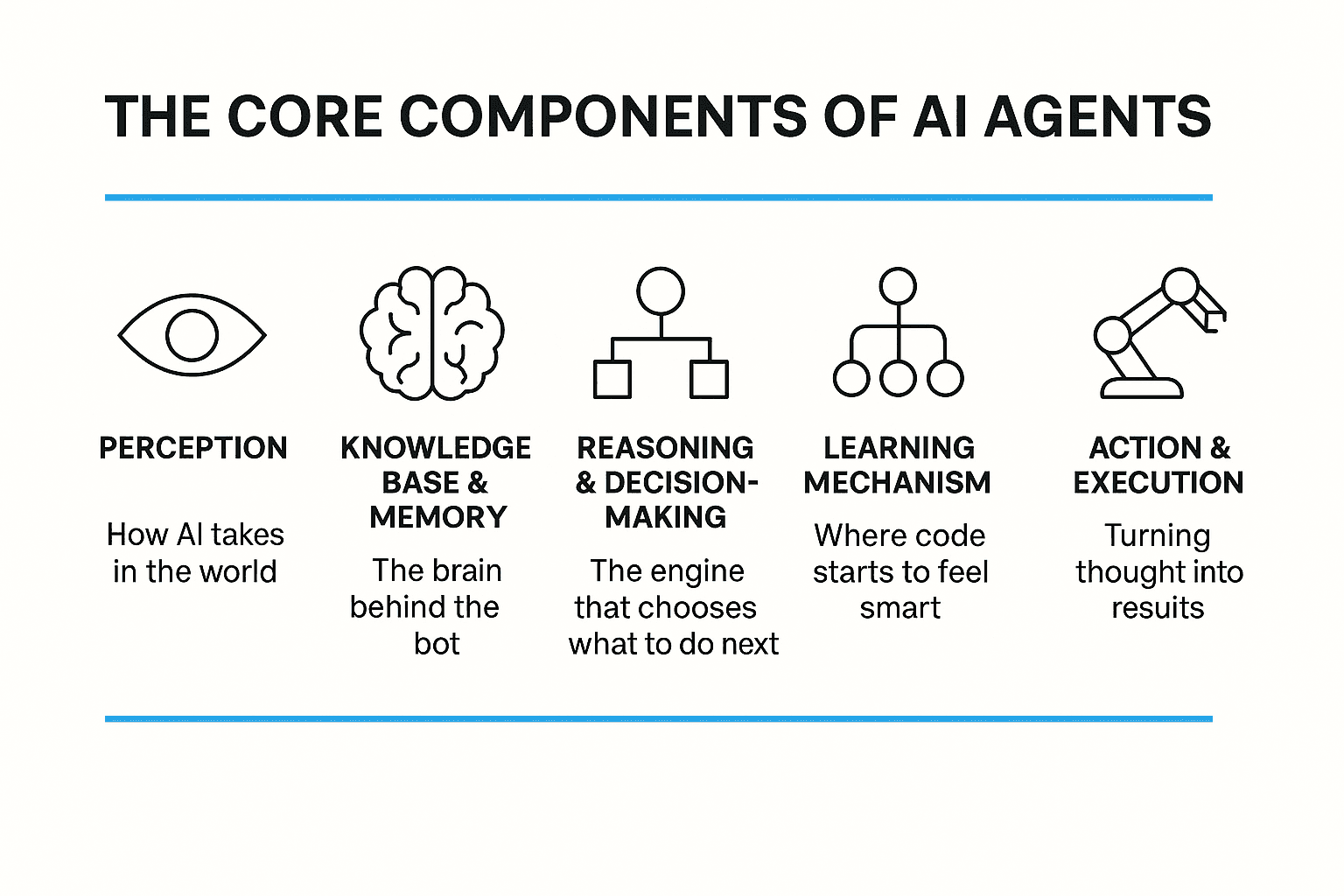
The core components of AI agents include:
Perception

AI perception encompasses the sophisticated process by which artificial intelligence systems gather, process, and interpret sensory data from their environment. Unlike traditional data processing that simply handles predefined inputs, the perception layer employs advanced technologies to create a comprehensive understanding of complex, real-world scenarios, ex:
Sensory Data Collection: Various sensors and input mechanisms capture raw data from the environment, including visual information through cameras, textual data through document processing, and numerical data through database connections.
Feature Extraction: Advanced algorithms identify relevant patterns, objects, and characteristics within the collected data, filtering out noise and focusing on meaningful information.
Pattern Recognition: Machine learning models analyze extracted features to identify known patterns, anomalies, and relationships that inform decision-making processes.
Contextual Integration: The system combines information from multiple sources to create a comprehensive understanding of the current situation and its implications.
Perception in action
Healthcare: Cancer Detection Through Medical Imaging

AI perception systems are being used in cancer detection through sophisticated medical image analysis. These systems employ deep learning algorithms, particularly convolutional neural networks (CNNs), to analyze mammograms, CT scans, MRIs, and other medical imaging modalities. (https://www.sciencedirect.com/science/article/pii/S2666990024000132)
Advanced Pattern Recognition: AI perception systems can identify subtle abnormalities in medical images that might be missed by human radiologists. For instance, mammography AI systems have demonstrated the ability to detect breast cancer with 94.7% agreement rates with manual readings, while identifying 20-40% of interval cancers that were retrospectively visible on prior screenings (https://www.nature.com/articles/s41591-024-03408-6)
Real-Time Processing: AI perception in healthcare processes enormous volumes of medical imagery rapidly, enabling radiologists to focus on complex cases while ensuring no abnormalities are overlooked. Systems like the EyeArt algorithm can detect diabetic retinopathy without requiring pupil dilation, streamlining the diagnostic process significantly. (https://www.cancerresearch.org/blog/ai-cancer)
As agentic AI systems become more sophisticated, the perception layer will play an increasingly critical role in enabling autonomous operation across diverse industries. The ability to accurately perceive, interpret, and understand complex environments remains the foundation upon which all autonomous intelligence depends, making continued advancement in perception technologies essential for the future of agentic AI
Knowledge base and memory

The knowledge base is where the AI agent stores facts, rules, and structured data about its environment or tasks, while memory allows the agent to remember past interactions or state. There are often two types of memory: short-term (immediate context) and long-term (historical knowledge and experiences).
- Example: A customer service chatbot uses its long-term memory to recall a user's prior support tickets and short-term memory to maintain the context of the current conversation.
Agent Types:
Simple reflex: Works under predefined rules and defined data
Model based: Has a more advanced decision making mechanism. It evaluates probable outcomes and consequences before making a decision
Goal based agents: The agent compares different approaches to help it achieve the desired outcome, it always choses the most efficient path. They're suitable to perform complex tasks such as NLP, Natural Language Processing
Utility base agents: A utility-based agent employs a complex reasoning algorithm to assist users in maximizing the outcome they desire, ex: customers can use a utility-based agent to search for flight tickets with the minimum travel time, regardless of the price.
Learning agents: A learning agent continually learns from past experiences to enhance its performance. Using sensory input and feedback mechanisms, the agent adapts its learning element over time to meet specific standards.
Hierarchical agent: Are an organized group of intelligent agents arranged in tiers. Higher-level agents decompose complex tasks into smaller ones and assign them to lower-level agents. This eventually turns into Multi agent systems.
Source: https://aws.amazon.com/what-is/ai-agents/
Reasoning and decision-making

This component enables the agent to analyze information, assess context, infer outcomes, and choose actions. Reasoning can involve logic, probability, or advanced neural network models. The decision-making process ensures that the agent selects the optimal step to achieve its goal.
Learning mechanism

Allows the agent to adapt its behavior based on feedback or experiences. This can involve machine learning techniques, reinforcement learning, or continual adjustment of internal models.
- Example: A recommendation engine updates its suggestions for a user by analyzing which items the user clicks on or purchases over time.
Action and execution

In this stage, the agent carries out the chosen action, affecting its environment physically (robot actuators), digitally (API calls), or through language (generating a response). This translates decisions into real-world or system operations.
- Example: A robotic vacuum (like a Roomba) moves to a dirty area and starts cleaning after determining it is required.
How Agentic AI Differs from Traditional AI Approaches
The distinction between agentic AI and traditional artificial intelligence is substantial and transformative. Understanding these differences is crucial for organizations considering the transition to more autonomous systems.
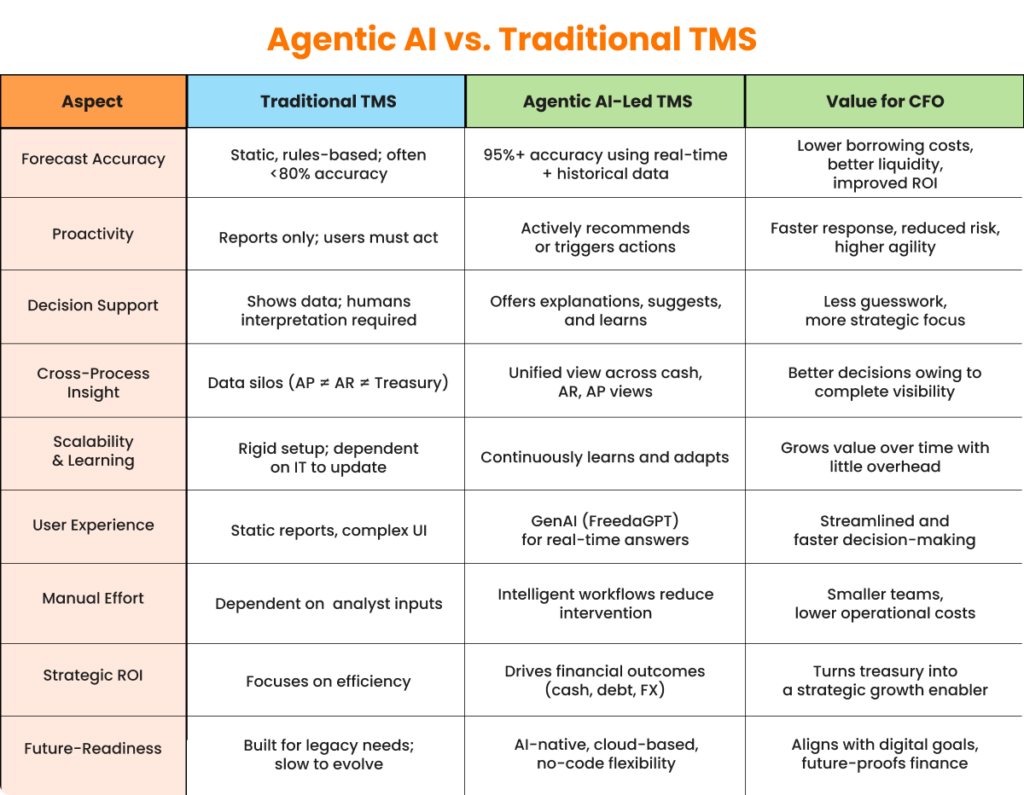
Comparison of traditional treasury management software and agentic AI-led TMS highlighting key functional differences and CFO benefits.
| Aspect | Traditional AI | Agentic AI |
| Execution Model | Batch or synchronous processing | Asynchronous, event-driven, goal-oriented |
| Autonomy Level | Limited; requires human orchestration | High; operates independently with adaptive strategies |
| Decision-Making | Model inference only (classification, prediction) | Contextual, goal-based, dynamic reasoning |
| Proactivity | Reactive to input data | Proactive and reactive; anticipates and initiates actions |
| Learning Capability | Often model-centric training | Embedded learning, memory, and self-correction |
| Task Complexity | Single or simple workflows | Complex, evolving multi-step plans |
If traditional AI is like a sophisticated calculator that waits for input, agentic AI functions more like a digital executive—reading emails, prioritizing tasks, coordinating resources, and making strategic decisions across multiple systems.^6
Real-World Applications: Agentic AI in Action
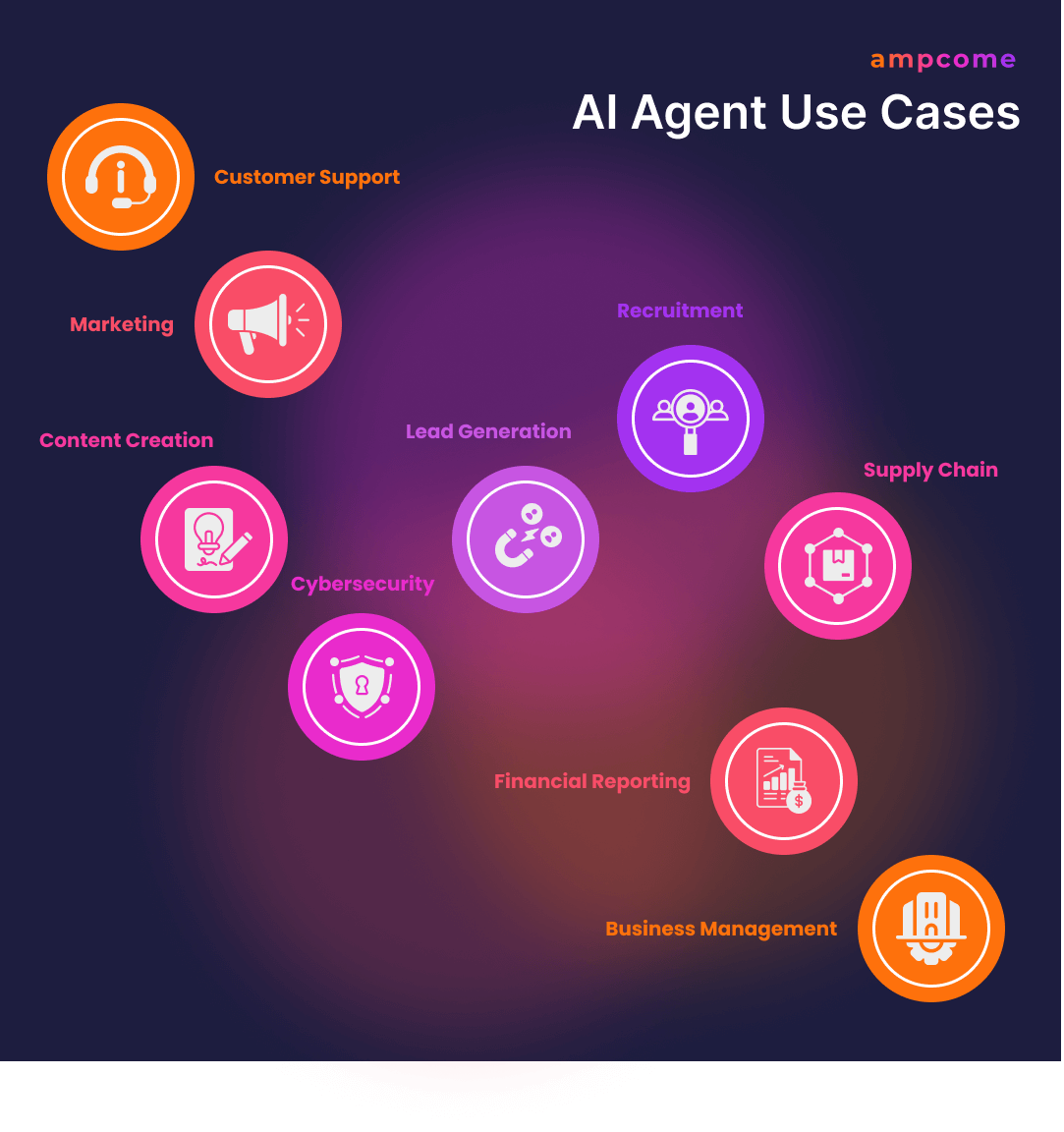
The practical applications of agentic AI span across industries, demonstrating its versatility and transformative potential. Here are key examples of how organizations are leveraging autonomous agents:^8
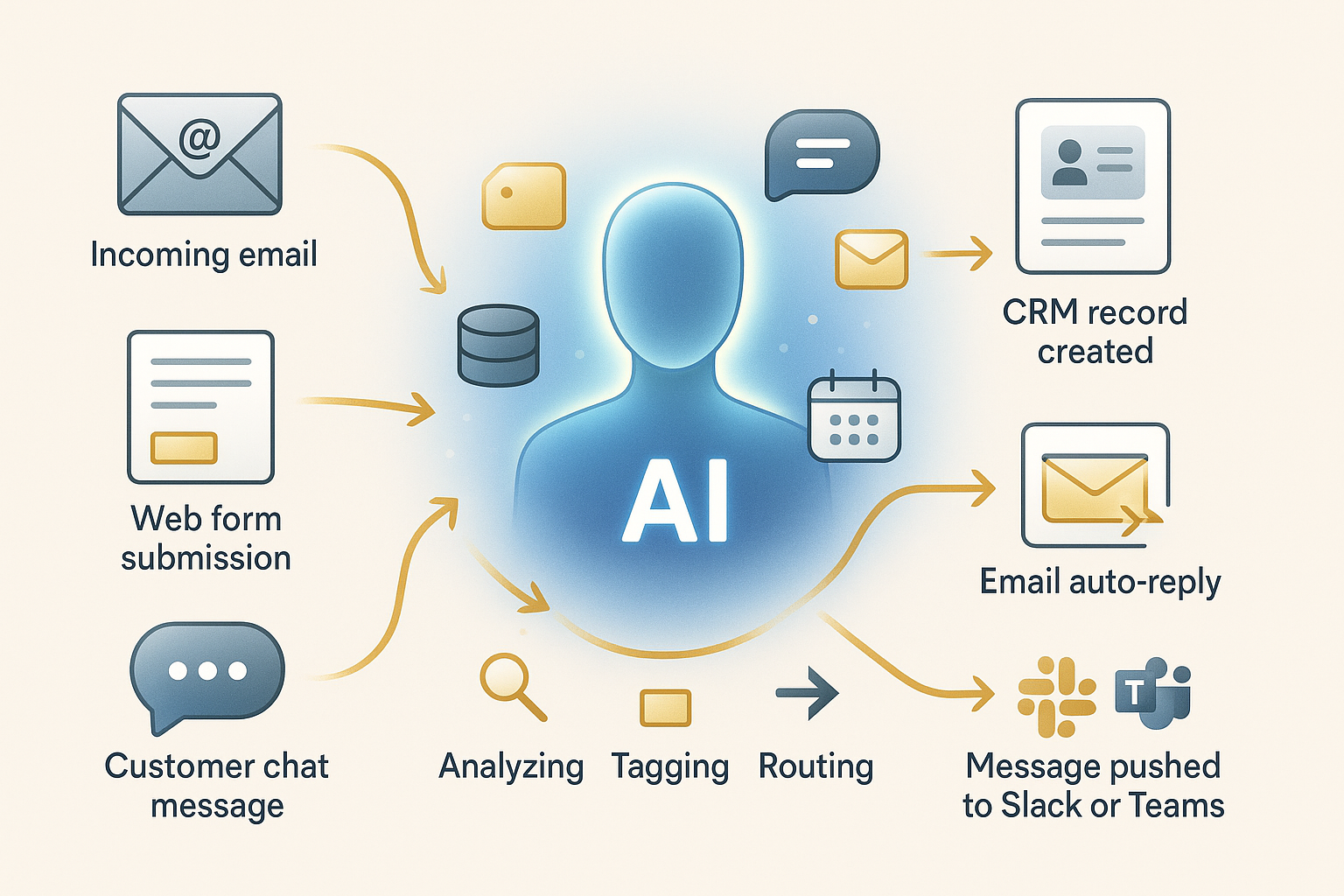
AI agent decision-making process showing how incoming customer communications are analyzed, tagged, and routed automatically to CRM, email responses, or collaboration tools like Slack and Teams.
Customer Service Revolution
Agentic AI is fundamentally transforming customer support operations. Rather than simply responding to inquiries, these systems proactively identify issues, coordinate solutions across multiple channels, and continuously improve service quality.^8
Example: Darktrace's autonomous cybersecurity agents monitor network activity continuously, detect anomalies in real-time, and neutralize threats without human intervention, preventing data breaches before they occur.^8
Financial Services Automation
In the financial sector, agentic AI agents analyze market trends, detect fraudulent transactions, and optimize investment strategies autonomously.^8
Example: JPMorgan Chase employs AI agents that examine spending behaviors and flag suspicious transactions in milliseconds, significantly reducing false positives while enhancing security protocols.^8
Supply Chain Optimization
Autonomous agents are revolutionizing logistics by predicting disruptions, optimizing delivery routes, and managing inventory dynamically.^8
Example: Amazon's AI-driven supply chain system automatically reroutes shipments based on weather conditions, traffic patterns, and inventory levels, ensuring optimal delivery times with minimal delays.^8
The Agentic AI Architecture

Diagram showing the four main components of agentic AI: perception, cognitive, action, and communication layers, with descriptions of their functions.
Understanding how agentic AI systems operate requires examining their underlying architecture. Modern agentic AI platforms consist of several integrated layers that work together to enable autonomous behavior:
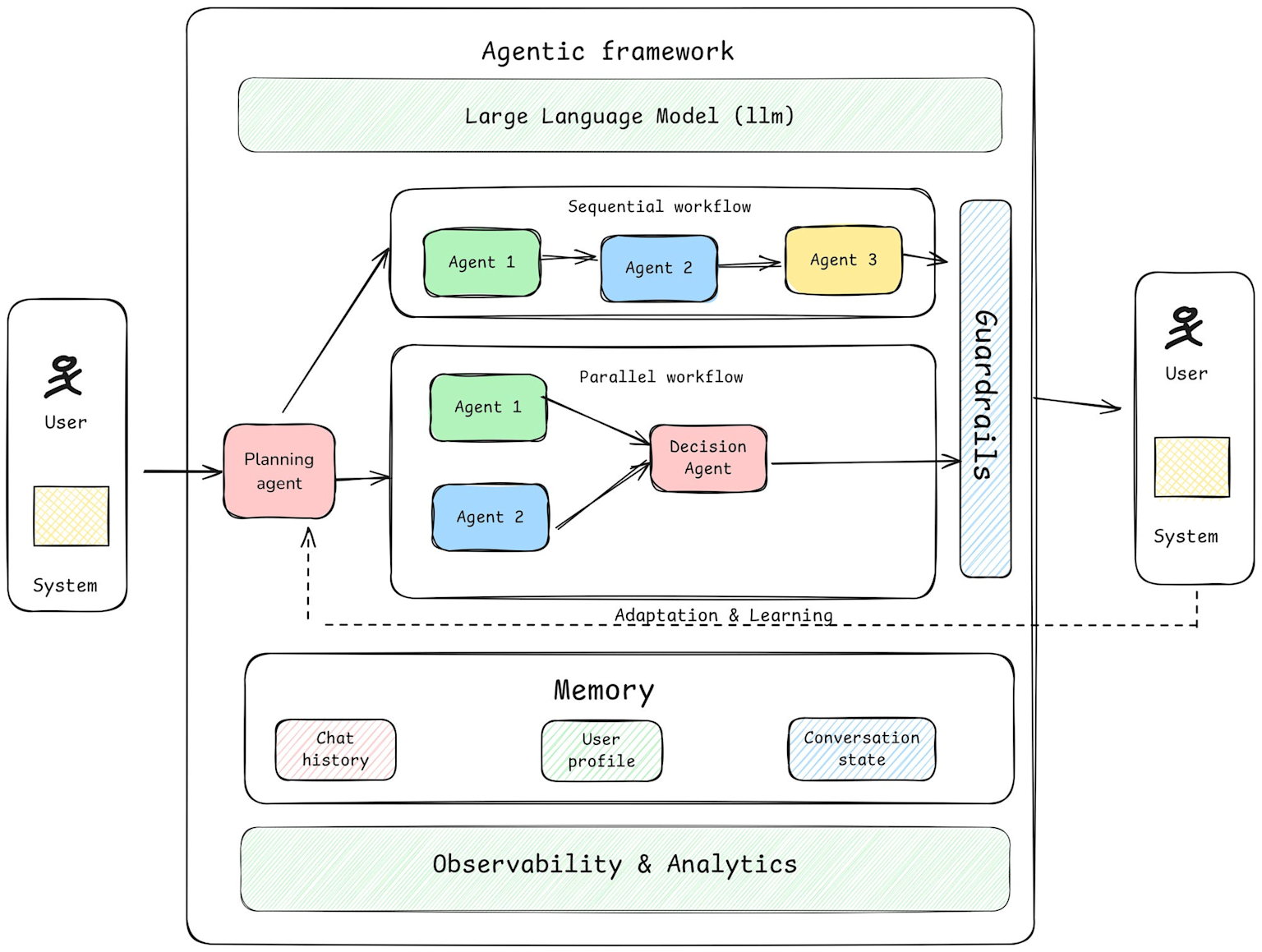
Architecture diagram of an agentic AI framework showing multi-agent workflows, memory components, and guardrails built on a large language model.
Perception Layer: Utilizes sensors, natural language processing, and computer vision to gather and interpret environmental data.
Cognitive Layer: Employs machine learning models and decision-making frameworks to process information and generate strategies.
Action Layer: Contains execution mechanisms and feedback loops that enable the system to implement decisions and monitor results.
Communication Layer: Facilitates interactions with humans and other systems through multimodal capabilities.
This architecture enables agentic AI systems to operate in a continuous cycle of perception, reasoning, action, and learning—constantly adapting to new information and refining their approach to achieve objectives more effectively.^6
Market Trends and Investment Landscape
The agentic AI market is experiencing explosive growth, with organizations across industries recognizing its transformative potential. Current market data reveals unprecedented investment and adoption patterns:
Market Growth Trajectory: The agentic AI market is projected to surge from $5.2 billion in 2024 to $196.6 billion by 2034, representing a compound annual growth rate (CAGR) of over 30%.^13
Adoption Acceleration: Currently, 29% of organizations are already implementing agentic AI solutions, while 44% plan to deploy these technologies within the next year. In Australia, over 90% of firms are adopting or planning to adopt agentic AI within six months.^10^16
Investment Commitment: Organizations are making substantial financial commitments, with 43% allocating more than half of their AI budgets to agentic capabilities. Australian firms alone are expected to invest $12.3 billion in agentic AI by 2028.^15
ROI Expectations: An impressive 62% of organizations project returns on investment exceeding 100% from agentic AI deployment, with average projections reaching 171%.^16
Business Impact and Transformation
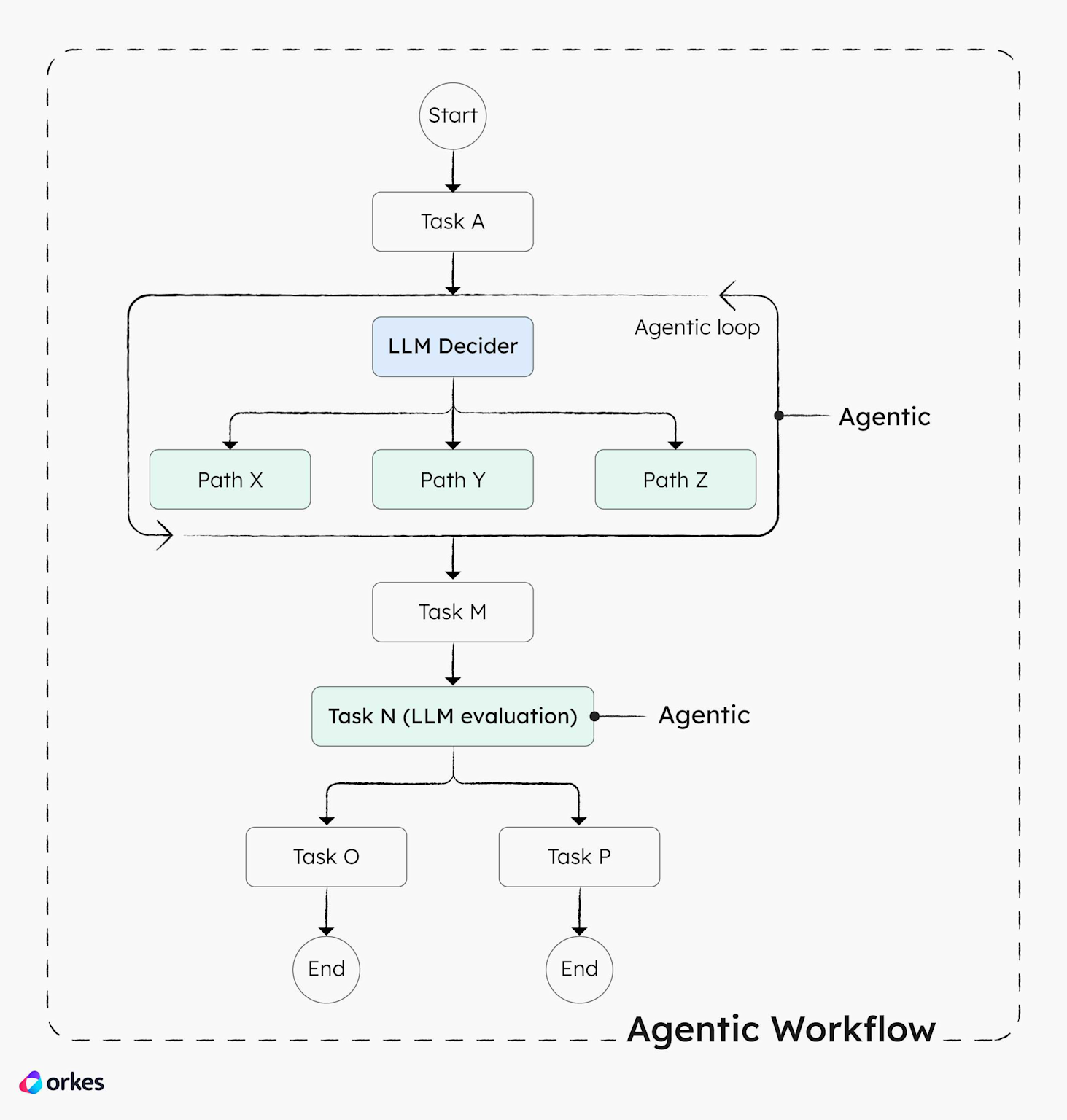
Agentic AI workflow diagram illustrating how an LLM decider selects between different paths within an autonomous agentic loop, with evaluation tasks and multiple end outcomes.
The implementation of agentic AI is delivering measurable business outcomes across multiple dimensions:
Operational Efficiency: Organizations report up to 30% reduction in operational costs through autonomous process management and decision-making.^10
Customer Experience: Companies implementing agentic AI have achieved 25% reduction in customer complaints and 30% increase in customer satisfaction within six months.^10
Productivity Gains: Tasks completed by agentic AI systems take 40% less time compared to manual completion, with users reporting higher satisfaction levels.^10
Service Automation: By 2029, Gartner predicts that agentic AI will autonomously resolve 80% of common customer service issues without human intervention.^17
Challenges and Considerations
Despite its promising potential, agentic AI implementation presents several challenges that organizations must address:
Governance and Oversight: Establishing clear frameworks for autonomous decision-making while maintaining accountability and compliance.^10
Security and Reliability: Ensuring autonomous systems operate securely and reliably in complex, unpredictable environments.^14
Data Quality: Autonomous agents require high-quality, comprehensive training data to make accurate decisions.^14
Workforce Adaptation: Managing the transition as AI agents take on roles traditionally performed by humans, requiring workforce retraining and organizational restructuring.^18
Comparing Agentic AI Platforms and Tools
Organizations exploring agentic AI have access to various platforms and frameworks, each offering different capabilities:
Enterprise Solutions: Companies like IBM, Microsoft Azure, and Google Cloud provide comprehensive agentic AI platforms with enterprise-grade security and integration capabilities.^6
Specialized Frameworks: Tools like AutoGPT, LangGraph, and CrewAI enable developers to build custom autonomous agents for specific use cases.^19
Industry-Specific Solutions: Platforms like Smartly.io for advertising optimization and Madgicx for marketing automation demonstrate domain-specific agentic AI applications.^20
Future Outlook: The Next Five Years
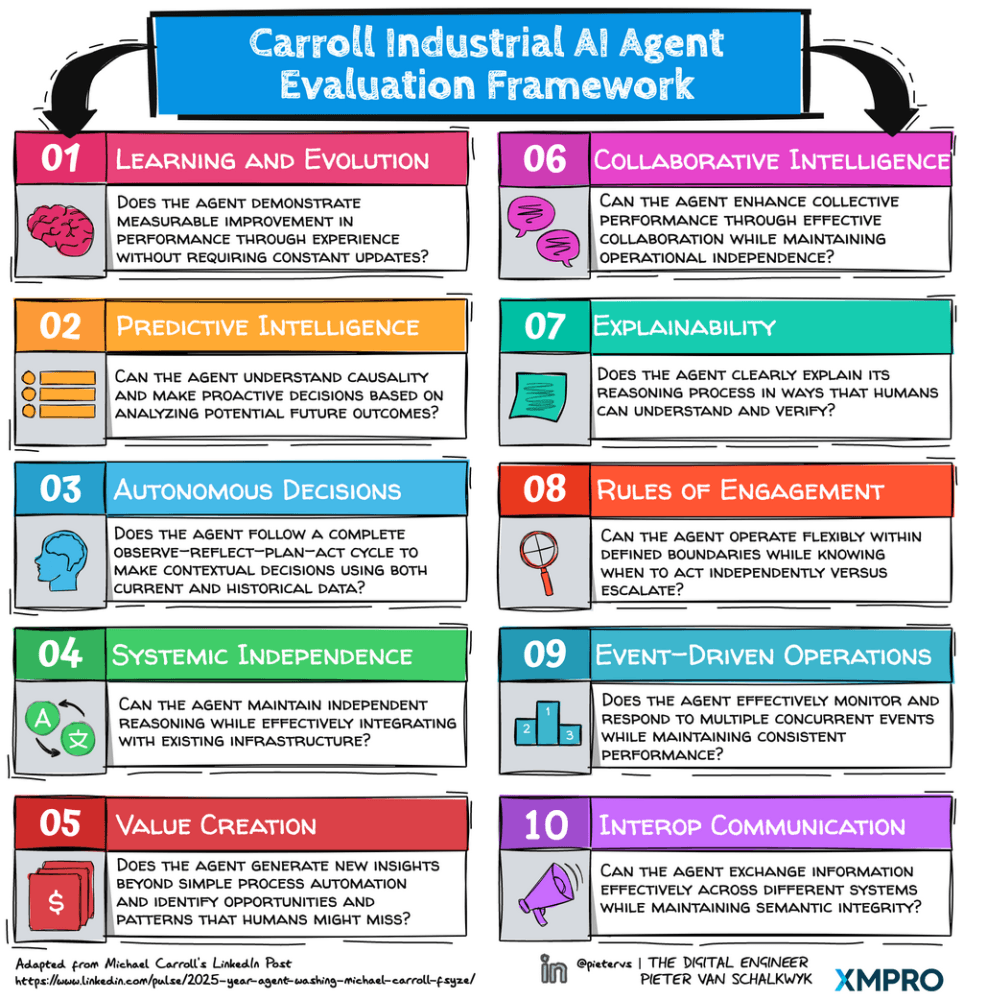
The Carroll Industrial AI Agent Evaluation Framework outlines ten key criteria for assessing AI agents' capabilities and decision-making efficacy in industrial applications.
Looking ahead to 2030, the trajectory of agentic AI points toward unprecedented advancement and integration across business operations:
Ubiquitous Adoption: AI agents are expected to become standard across enterprises, potentially managing entire business functions with minimal human oversight.^18
Enhanced Capabilities: Development of more sophisticated reasoning abilities will enable agents to handle increasingly complex tasks and decision-making scenarios.^18
Integration with Emerging Technologies: The convergence of agentic AI with robotics, IoT sensors, and augmented reality will create new possibilities for intelligent automation that bridges digital and physical worlds.^18
Architectural Evolution: Advanced innovations including neuromorphic computing and quantum-enhanced AI may provide the computational power needed for truly general-purpose autonomous agents.^14
Strategic Implementation Recommendations
Organizations considering agentic AI adoption should follow a structured approach:
Start with Clear Objectives: Define specific, measurable goals that agentic AI can address more effectively than traditional approaches.
Establish Governance Frameworks: Implement robust oversight mechanisms to ensure autonomous systems operate within acceptable parameters while maintaining accountability.
Invest in Data Infrastructure: Ensure high-quality, comprehensive data sources that can support autonomous decision-making capabilities.
Plan for Workforce Evolution: Develop strategies for retraining employees and restructuring roles as AI agents assume new responsibilities.
Choose Appropriate Platforms: Select agentic AI solutions that align with organizational needs, technical capabilities, and integration requirements.
Conclusion: Embracing the Agentic Future
Agentic AI represents more than just another technological advancement—it's a fundamental paradigm shift toward truly intelligent, autonomous systems that can think, plan, and act independently to achieve complex objectives. With market projections indicating explosive growth and organizations reporting substantial returns on investment, the transition from reactive AI tools to proactive AI agents is not just inevitable—it's already underway.
The organizations that will thrive in this new landscape are those that recognize agentic AI's transformative potential and take decisive action to implement these technologies strategically. By understanding the capabilities, challenges, and best practices outlined in this analysis, business leaders can position their organizations to harness the full power of autonomous intelligence.
As we move toward 2030, agentic AI will likely become as fundamental to business operations as the internet is today. The question isn't whether your organization will adopt agentic AI—it's how quickly and effectively you can integrate these powerful autonomous systems to gain competitive advantage in an increasingly intelligent world.
The age of passive AI will stay will mature and become natural to us as just many other tools, ex: mobile apps and instant messaging. The era of agentic intelligence is beginning.
Roberto
roberto@rober.to


