

Welcome to one of the most powerful and intuitive techniques in prompt engineering: Role Prompting. By mastering this skill, you can transform a generalist AI assistant into a team of specialized experts, each ready to tackle your specific needs with precision and depth. This chapter will guide you through the what, why, and how of role prompting, turning you into a master of AI delegation.
What is Role Prompting?
Role prompting is the practice of instructing a Large Language Model (LLM) to adopt a specific persona, expertise, or perspective when generating a response.
Instead of interacting with the AI in its default mode, you are essentially asking it to "wear a hat" or "play a role." This shapes how it processes your request, the knowledge it accesses, the language it uses, and the format of its output. Think of it as casting the AI in a play—you're not just asking for information; you're asking it to step into character and respond as that character would.
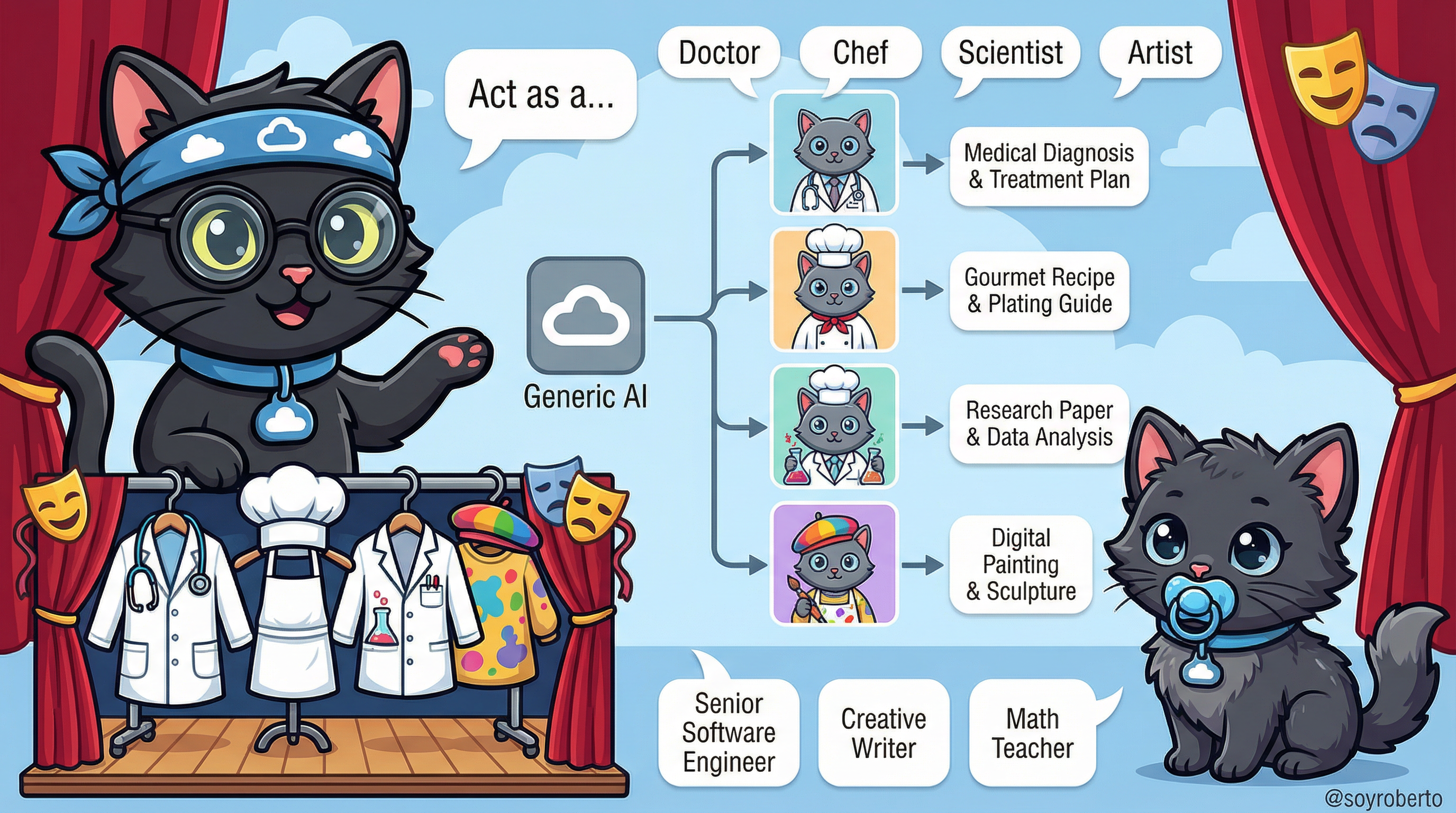
As Trufa explains to Paula, a generic AI can be transformed into a specialist. By providing a role, you unlock a new level of capability. A simple request to a generic AI might yield a generic answer. But ask a "senior software engineer" AI, and you'll get a response filled with technical depth and industry best practices. Ask a "creative writing professor," and you'll receive nuanced feedback on tone and narrative structure.
The Anatomy of a Role Prompt
A truly effective role prompt is more than just saying "act as a doctor." It's a carefully constructed set of instructions that builds a complete persona for the AI. A typical role prompt consists of several key components:
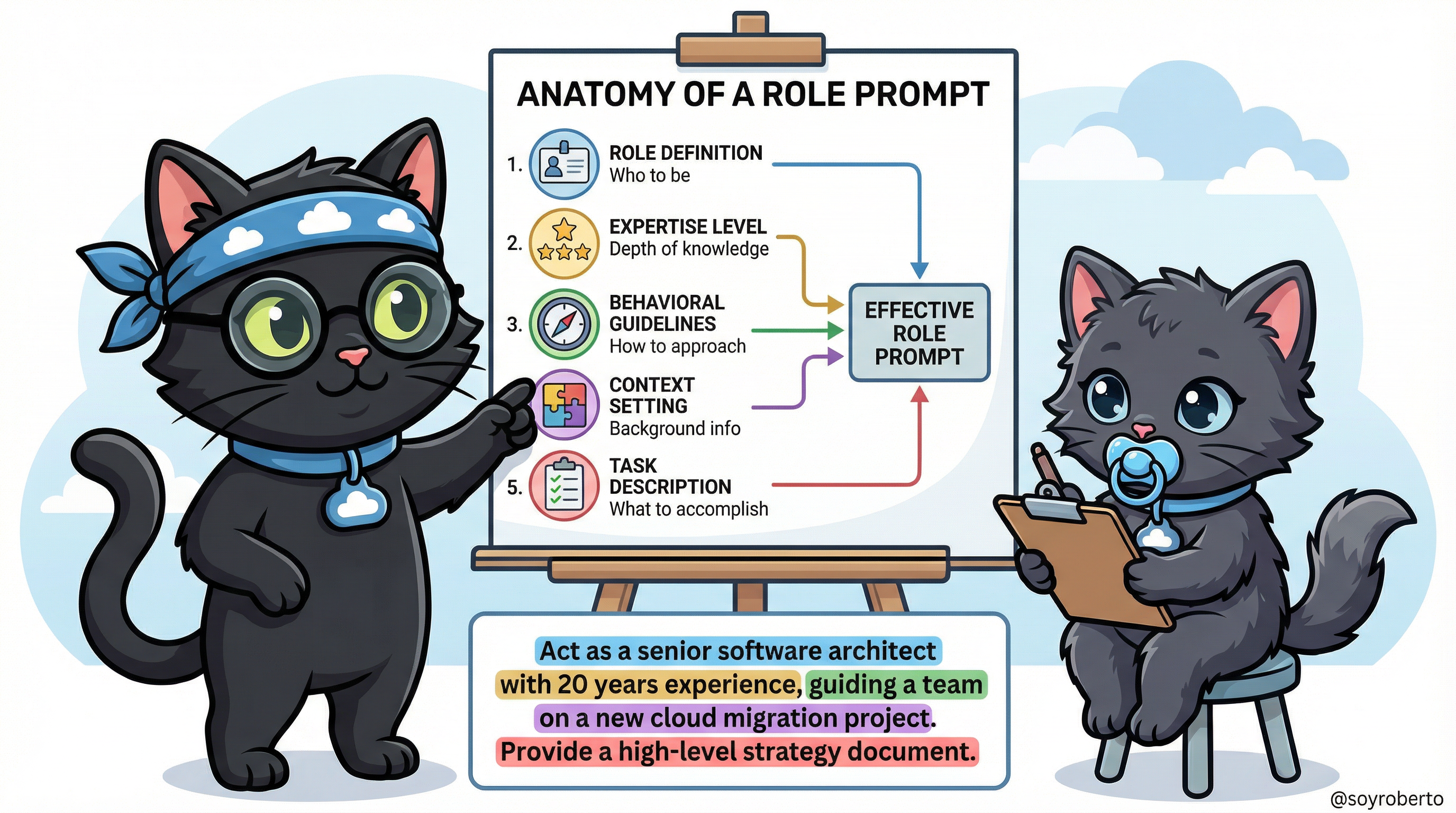
- Role Definition: A clear statement of who or what the AI should be (e.g., "You are a senior software architect").
- Expertise Level: Specify the depth of knowledge or experience (e.g., "with 20 years of experience in distributed systems").
- Behavioral Guidelines: Describe how the role should approach problems or communicate (e.g., "Approach problems methodically, always considering performance implications").
- Context Setting: Provide relevant background information (e.g., "guiding a team on a new cloud migration project").
- Task Description: Clearly state what you want the role-playing AI to accomplish (e.g., "Provide a high-level strategy document").
Example of a complete role prompt:
"Act as a senior software architect with 20 years of experience in distributed systems, guiding a team on a new cloud migration project. You have deep knowledge of scalability patterns and have worked on systems processing millions of transactions per day. Approach problems methodically, always considering performance implications. Your task is to provide a high-level strategy document for migrating a monolithic application to a microservices architecture."
This detailed prompt leaves no room for ambiguity and sets the AI up for success.
The Psychology Behind Role Prompting
Why is role prompting so effective? The answer lies in how it influences the AI's internal processes, which can be understood from both a technical and a practical perspective.
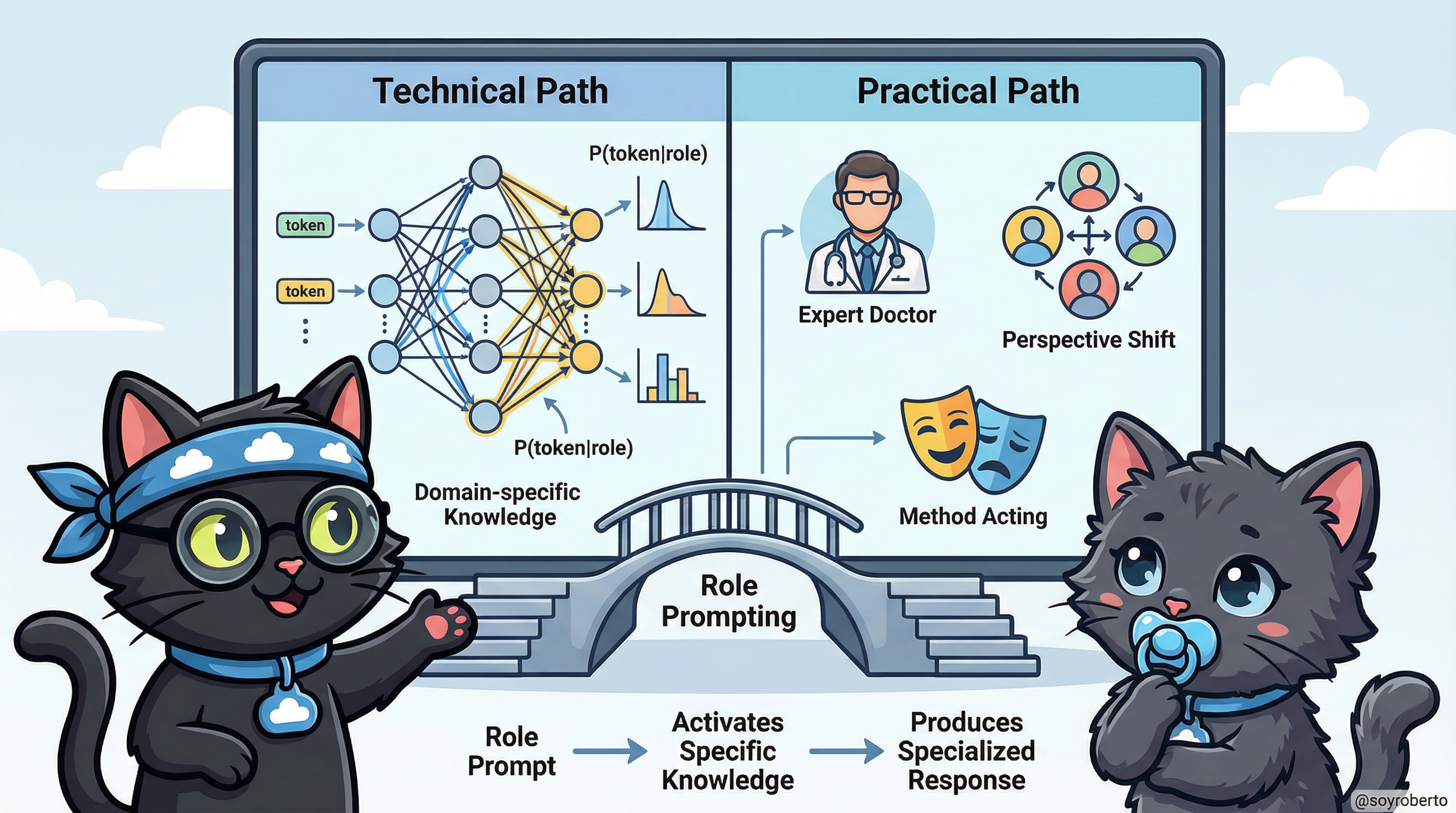
Technical Path: Statistical Steering of Language Models
From a technical standpoint, a role prompt works by influencing the statistical distribution of token probabilities in the LLM's generation process. It:
- Activates Domain-Specific Knowledge: The prompt increases the activation of neurons associated with the specified domain (e.g., medicine, law, programming).
- Biases Token Selection: It makes the model more likely to choose words and phrases commonly used by experts in that field.
- Establishes Stylistic Constraints: The role creates implicit rules for writing style, terminology, and reasoning patterns.
In essence, the role prompt reduces the AI's uncertainty, guiding it down a path of knowledge and language consistent with the requested persona.
Practical Path: Mental Models and Expectations
For non-technical users, role prompting is effective because it mirrors how we interact with human experts:
- The Expert Consultation Model: Just as you'd see a doctor for health advice, role prompting lets you "consult" different AI specialists.
- The Perspective Shift: It allows you to see a problem from multiple viewpoints by asking different personas for their input.
- The Method Acting Approach: The AI immerses itself in the character, adopting its knowledge and communication style to deliver a more authentic and useful response.
Why Role Prompting is Useful
Adopting this technique offers numerous benefits that can dramatically improve the quality and relevance of AI-generated content.
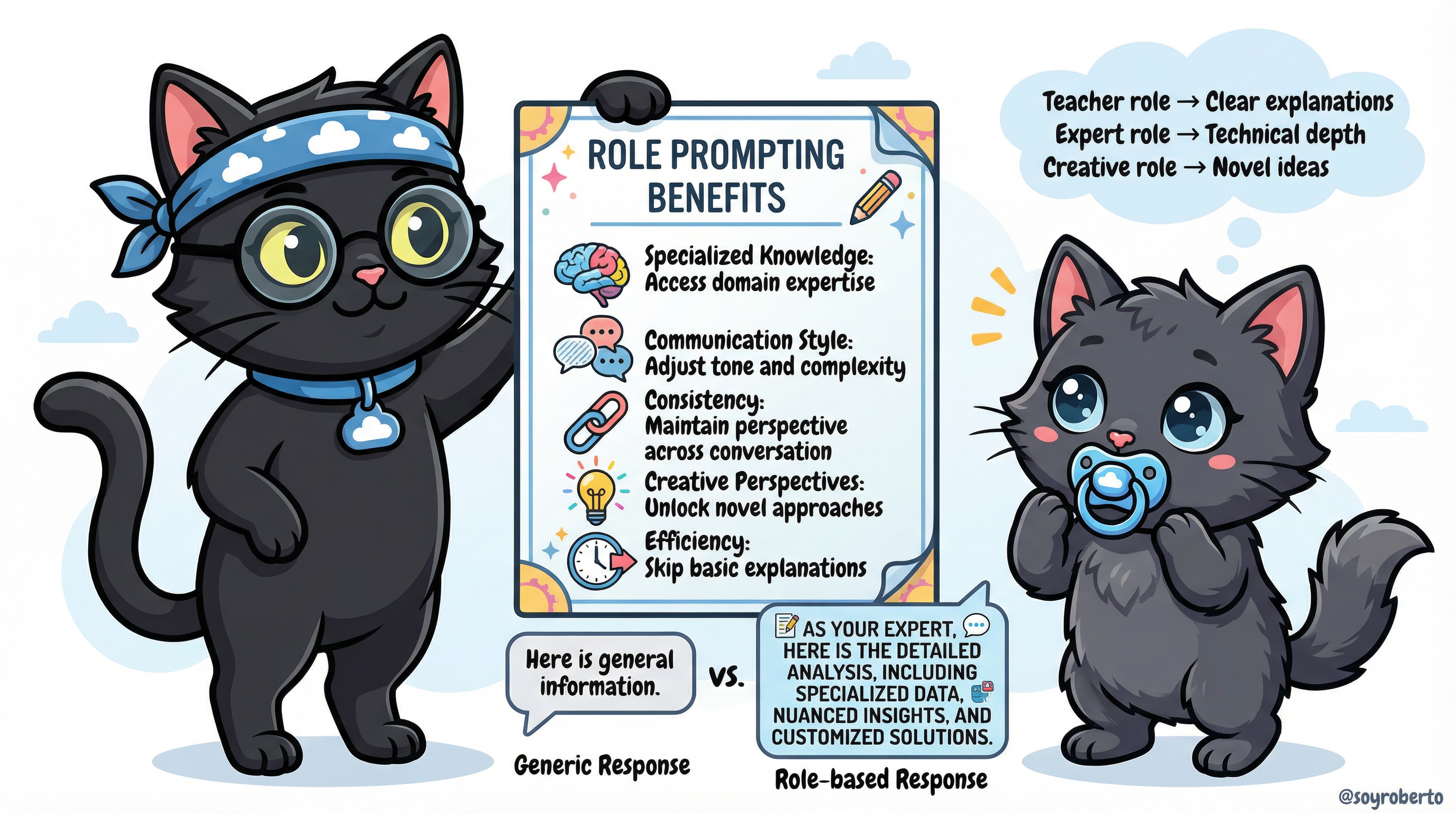
- Accessing Specialized Knowledge: It helps the AI focus on a specific domain, providing responses that are rich with expert terminology and concepts.
- Changing Communication Style: Need a complex topic explained simply? Ask the AI to be a teacher for 10-year-olds. Need a formal business proposal? Assign the role of a senior consultant.
- Improving Consistency: For complex, multi-turn conversations, a role prompt ensures the AI maintains a consistent perspective and approach throughout.
- Unlocking Creative Perspectives: Asking the AI to be a sci-fi author or a Renaissance inventor can yield novel ideas and solutions.
- Increasing Efficiency: By establishing a shared level of expertise, you can skip the basic explanations and dive straight into sophisticated discussions.
When to Use Role Prompting
While powerful, role prompting is one of several techniques in your toolkit. Knowing when to use it is key.
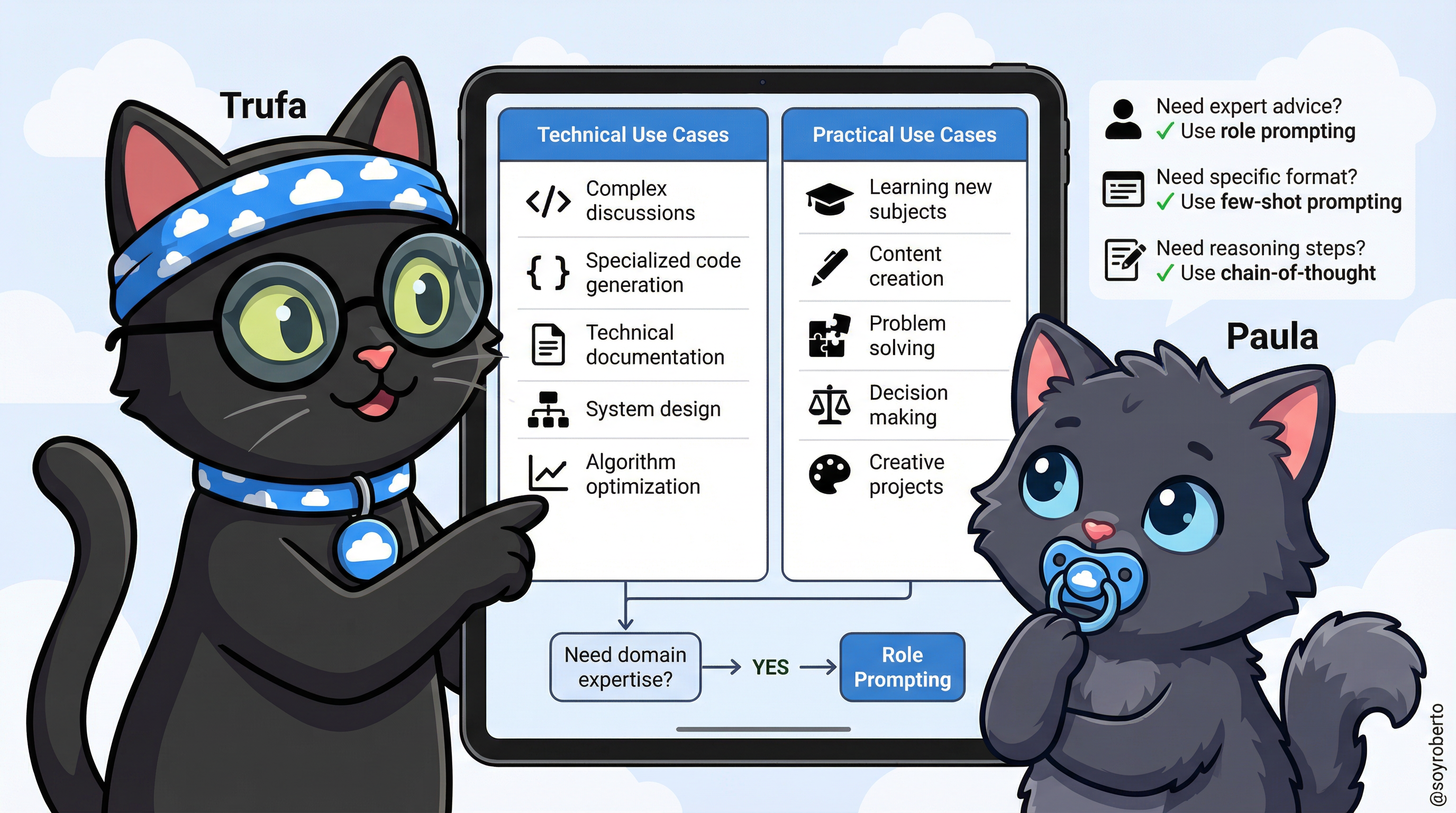
Use Role Prompting when you need:
- Domain-Specific Expertise: For tasks requiring deep knowledge in fields like medicine, law, engineering, or finance.
- A Consistent Perspective: For long-term projects where the AI must maintain a single, coherent viewpoint.
- A Specific Communication Style: When the tone, complexity, or format of the output is critical.
Consider other techniques when:
- You need the AI to follow a precise output format (use Few-Shot Prompting with examples).
- You need to see the AI's reasoning process step-by-step (use Chain-of-Thought Prompting).
Role Prompting in Action: Practical Examples
Let's see how Trufa guides Paula through applying role prompting to real-world scenarios.
Example 1: The Algebra Tutor
Imagine you need help with algebra. A vague prompt like "Help me with algebra" is ineffective. Let's build a better one using role prompting.
The Excellent Prompt:
"Act as an experienced and encouraging high school algebra teacher. Your goal is to create teaching materials for a 9th-grade class. Please generate three quadratic equation problems, each with a different difficulty level (easy, medium, hard). For each problem, provide a step-by-step solution using the quadratic formula. After the solution, explain one common mistake students might make when solving that specific problem."
Why This Works:
- Clear Role: "experienced and encouraging high school algebra teacher."
- Specific Task: Create three problems with varying difficulty.
- Context: For a 9th-grade class.
- Format Requirement: Provide step-by-step solutions and explain common mistakes.
This prompt transforms the AI from a simple calculator into a pedagogical tool, delivering content that is not just correct but also educationally valuable.
Example 2: The Medical Research Assistant
Now, consider a busy doctor who needs the latest research on a patient's condition. A generic search is inefficient.
The Excellent Prompt:
"Act as a clinical research assistant specializing in endocrinology. I am treating a 65-year-old male patient with Type 2 diabetes, currently managed with metformin and diet. He has a history of cardiovascular disease. Please summarize the key findings from the last 12 months of peer-reviewed research on new therapeutic options for patients with this specific profile. Focus on studies that report cardiovascular outcomes. Provide the summaries in a bulleted list, including the study name, primary endpoint, and a link to the publication."
Why This Works:
- Expert Role: "clinical research assistant specializing in endocrinology."
- Detailed Patient Context: Provides age, condition, current treatment, and comorbidities.
- Specific Information Need: New therapeutic options with a focus on cardiovascular outcomes.
- Timeframe and Source Preference: Last 12 months, peer-reviewed research.
- Structured Output: A bulleted list with specific fields.
This prompt turns the AI into a powerful decision support tool, saving the doctor valuable time and delivering precisely targeted, clinically relevant information.
Conclusion: The Power of Perspective
Role prompting is more than a clever trick; it is a fundamental shift in how we interact with AI. By moving beyond generic questions and embracing the power of perspective, you can unlock new levels of creativity, accuracy, and utility from any Large Language Model.
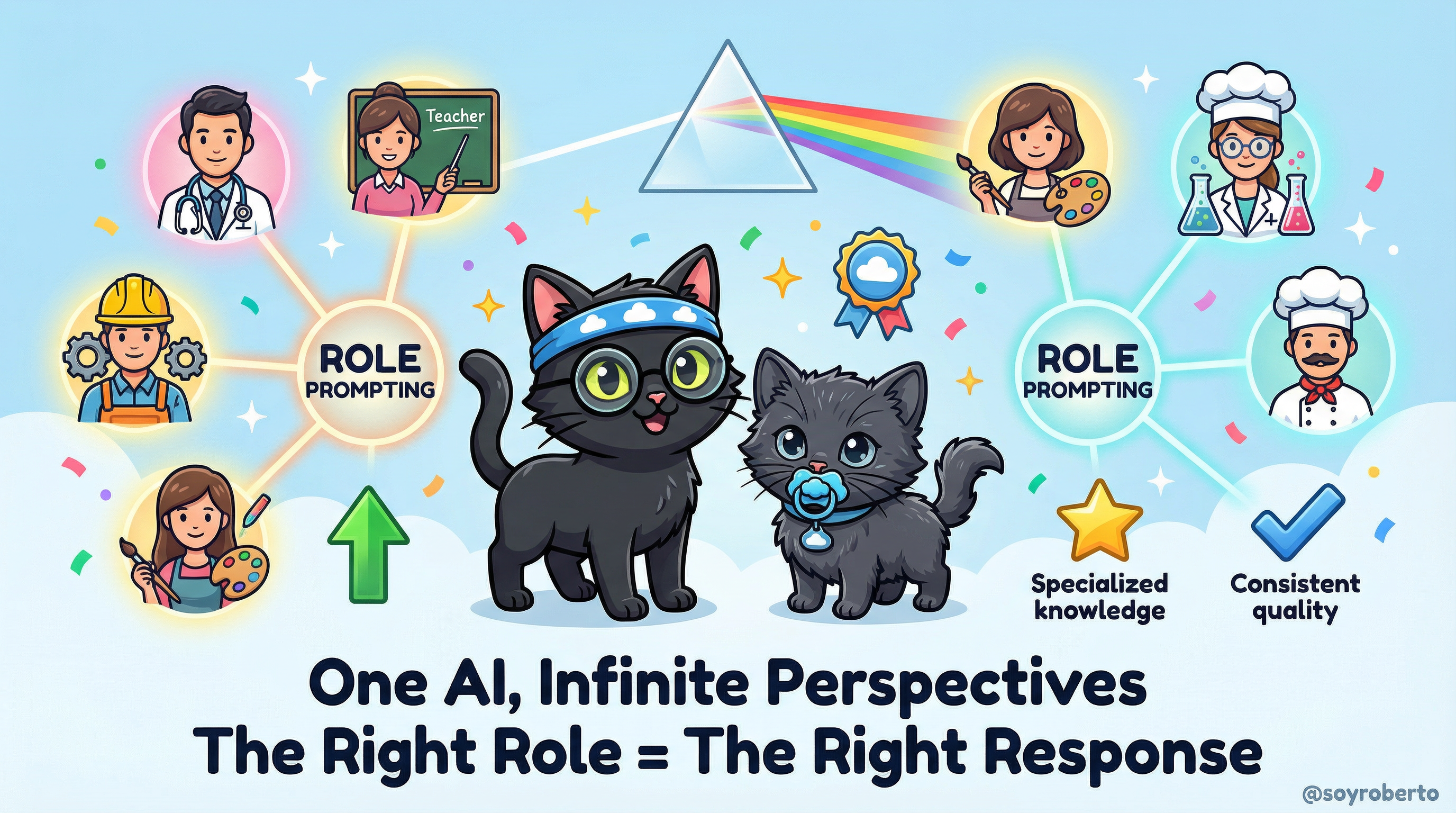
As you continue your journey in prompt engineering, remember that the right role can transform a good response into a great one. You now have the tools to build a team of virtual experts, each ready to assist you with your unique challenges. The only limit is your imagination.
By Roberto | @soyroberto
For more content, visit allthingscloud.net
About the author
I'm technologist in love with almost all things tech from my daily job in the Cloud to my Master's in Cybersecurity and the journey all along.
Comments
Join the discussionNo comments yet. Be the first to comment.


