

CHAPTER 1: THE PITFALLS OF POOR PROMPTS
WHEN LESS IS LESS: UNDERSTANDING INSUFFICIENT PROMPTS
Have you ever asked someone a question so vague that their answer couldn't possibly be helpful? Perhaps you've walked up to a stranger and simply said, "Directions?" without specifying where you want to go. Or maybe you've asked a colleague to "fix it" without explaining what "it" is or how it's broken.
When we communicate with other humans, they often ask clarifying questions or use contextual clues to fill in the gaps. But when communicating with AI systems, the burden of clarity falls entirely on you, the prompt creator.
In this chapter, Leonardo, your friendly AI fox guide, will walk you through common examples of insufficient prompts and explain why they fail to produce useful results. By understanding what makes a prompt ineffective, you'll be better equipped to craft prompts that get you the results you want.
EXAMPLE 1: "WRITE A STORY"

Prompt: Write a story.
This three-word prompt seems straightforward enough. You want the AI to write a story. But let's examine what's missing:
Leonardo's Prompt Anatomy:
❌ No genre specified - Should this be science fiction, romance, horror, or children's literature?
❌ No length indicated - Is a two-sentence story sufficient, or are you expecting a novel?
❌ No characters defined - Who should the story be about?
❌ No setting provided - Where and when should this story take place?
❌ No tone or style mentioned - Should it be humorous, serious, poetic, or straightforward?
❌ No plot elements suggested - What kind of conflict or resolution are you looking for?
❌ No audience specified - Is this for children, adults, or a specific demographic?
When faced with such a vague prompt, an AI system must make assumptions about all these missing elements. The result? A generic, often bland story that likely doesn't match what you had in mind. Different AI systems might produce wildly different responses to this prompt, ranging from children's fables to complex narratives, depending on their training and default settings.
Leonardo Says: "When you provide a prompt as open-ended as 'Write a story,' you're essentially asking the AI to play a guessing game. It's like walking into a restaurant and just saying 'Food, please!' You might get something edible, but it's unlikely to be what you were craving."
EXAMPLE 2: "GIVE ME INFORMATION"

Prompt: Give me information.
This prompt is even more problematic than our first example. Information about what? How much information? In what format? For what purpose?
Leonardo's Prompt Anatomy:
❌ No subject specified - Information about literally anything in the universe could be a valid response
❌ No depth indicated - Should this be a brief overview or an in-depth analysis?
❌ No format requested - Should the information be presented as facts, a narrative, or a tutorial?
❌ No purpose stated - How will this information be used? For learning, decision-making, or something else?
❌ No credibility requirements - Should the information be from specific sources or meet certain standards?
When an AI receives this prompt, it has no choice but to either:
- Ask clarifying questions (if it's designed to do so)
- Make a completely arbitrary choice about what information to provide
- Provide a meta-response about the nature of information itself
None of these outcomes is likely to satisfy your actual information need.
Leonardo Says: "Asking for 'information' without specifying what kind is like going to a library and asking for 'a book.' Even the most helpful librarian would need more details to assist you effectively."
EXAMPLE 3: "HELP ME WITH MY PROJECT"

Prompt: Help me with my project.
This prompt assumes the AI knows what your project is, what stage it's in, and what kind of help you need. Without this context, the AI can only provide generic advice that may not apply to your situation.
Leonardo's Prompt Anatomy:
❌ No project type specified - Is this a business project, school assignment, creative endeavor, or technical build?
❌ No current status described - What stage is the project in? Planning, execution, troubleshooting?
❌ No specific help requested - Do you need ideas, feedback, technical assistance, or resources?
❌ No goals mentioned - What are you trying to achieve with this project?
❌ No constraints indicated - What limitations (time, budget, skills) are you working within?
Without these details, the AI might suggest steps you've already completed or provide advice for a completely different type of project than what you're working on.
Leonardo Says: "Imagine calling a consultant and saying only 'Help me with my project.' Before they could offer any meaningful assistance, they'd need to ask you dozens of questions. The same is true for AI—the more context you provide upfront, the more tailored and useful the response will be."
EXAMPLE 4: "MAKE THIS BETTER"

Prompt: Make this better.
This prompt contains a critical error—it assumes the AI knows what "this" refers to. Without the content to be improved or criteria for "better," the AI has nothing to work with.
Leonardo's Prompt Anatomy:
❌ No content provided - What exactly needs improvement?
❌ No quality criteria defined - What would make it "better" in your view?
❌ No aspects specified - Should the focus be on clarity, accuracy, style, or something else?
❌ No current issues identified - What problems exist with the current version?
❌ No context given - What is the purpose or audience for this content?
This prompt is particularly problematic because it not only lacks specificity but also lacks the basic content needed for the AI to perform the requested task.
Leonardo Says: "'Make this better' is like handing someone an invisible object and asking them to fix it. Without seeing the object or knowing what's wrong with it, they can't possibly help you. Always include the actual content you want improved and specify how you want it improved."
EXAMPLE 5: "ANALYZE THIS DATA"
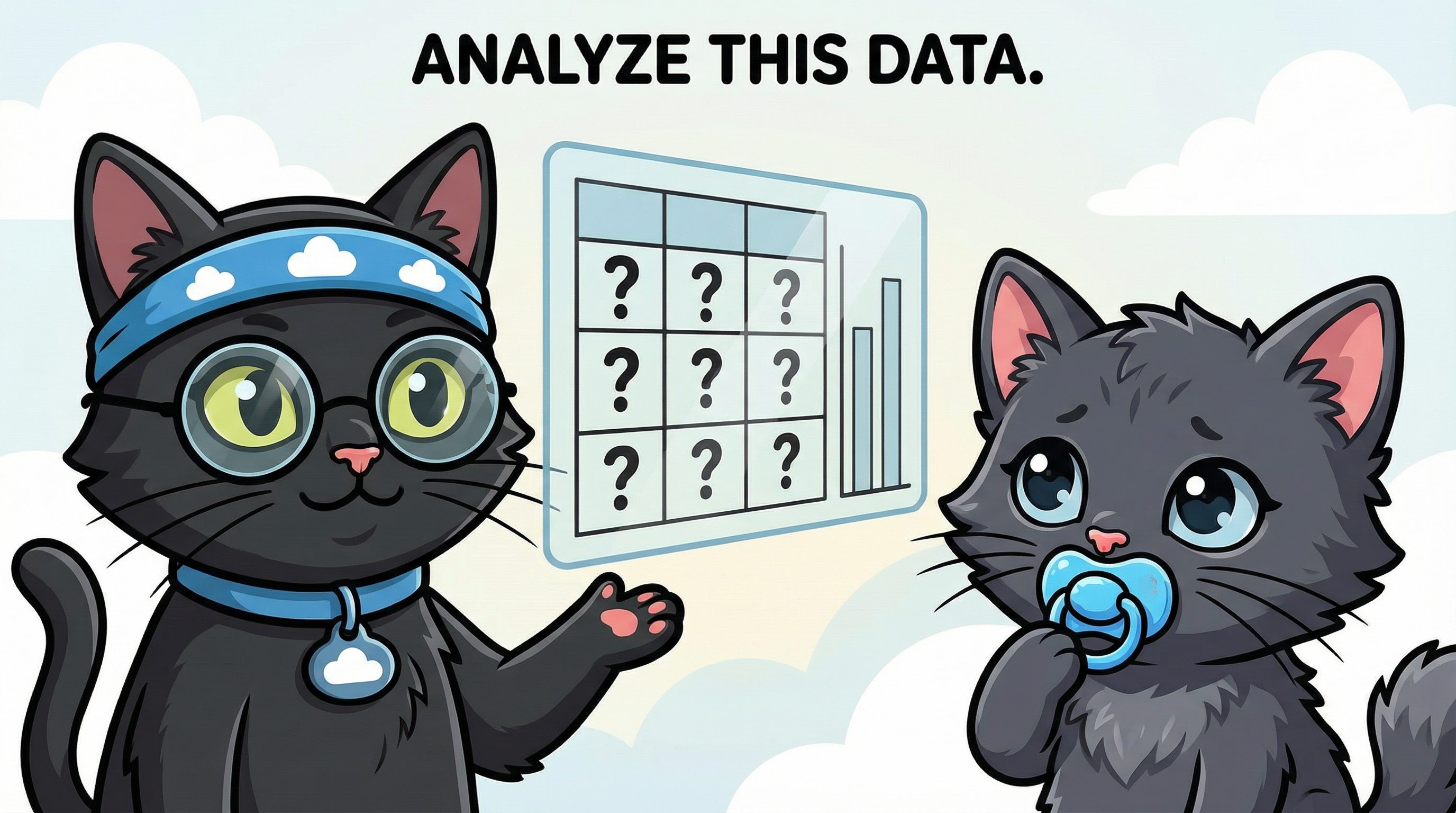
Prompt: Analyze this data.
Data analysis requires both the data itself and an understanding of what insights you're looking for. This prompt provides neither.
Leonardo's Prompt Anatomy:
❌ No data provided - What data should be analyzed?
❌ No analysis goals stated - What questions are you trying to answer with this analysis?
❌ No preferred methods mentioned - What type of analysis would be most useful?
❌ No output format specified - How should the results be presented?
❌ No level of detail indicated - Do you want a quick summary or an in-depth analysis?
Without the actual data and specific analysis objectives, the AI can only explain general data analysis concepts rather than providing the insights you're seeking.
Leonardo Says: "Asking an AI to 'analyze this data' without providing the data is like asking a chef to critique a dish without letting them taste it. And even with the data, without knowing what you're looking for, the analysis might focus on aspects that aren't relevant to your needs."
EXAMPLE 6: "CREATE A MARKETING PLAN"
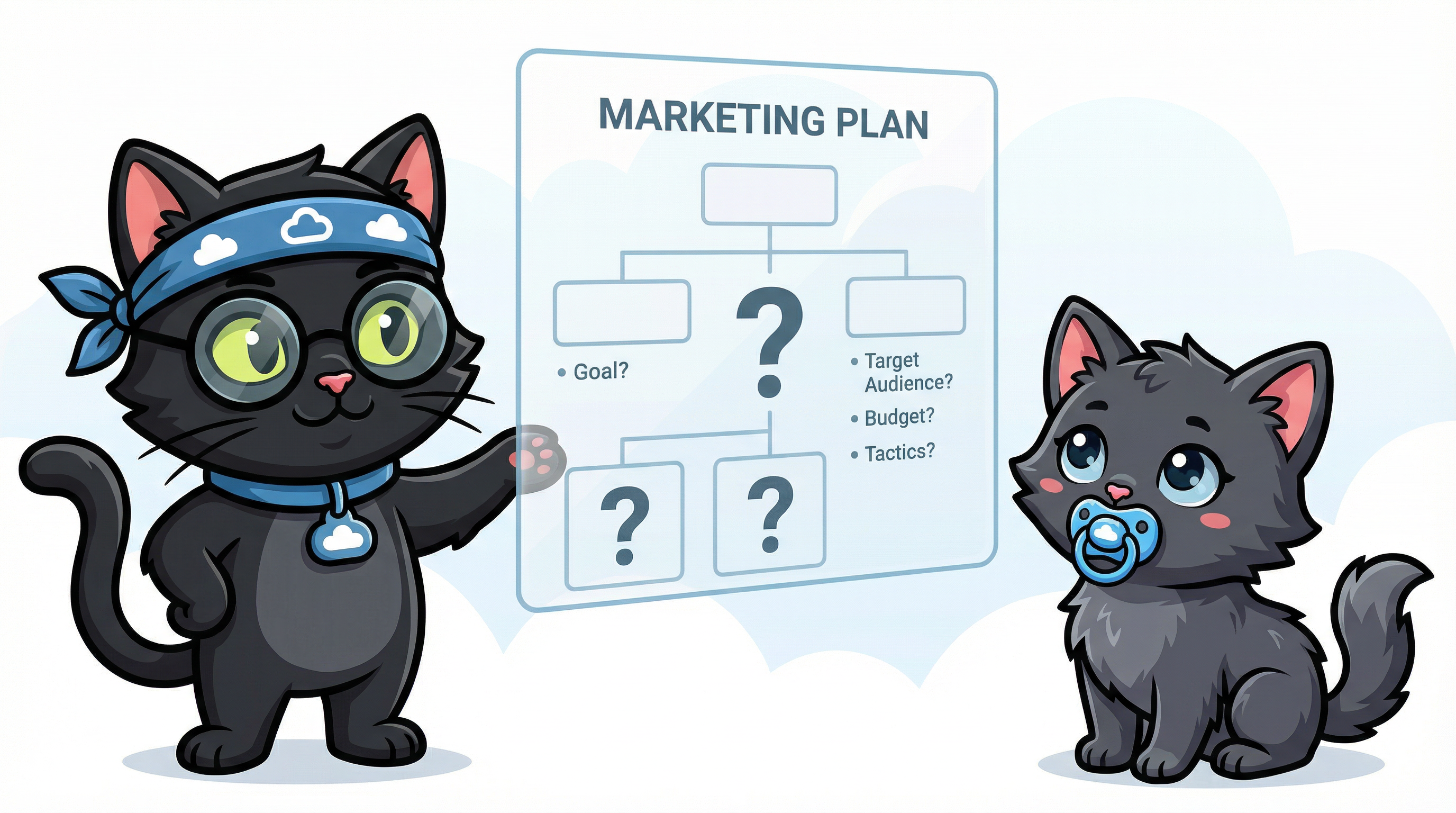
Prompt: Create a marketing plan.
Marketing plans are highly specific to products, services, audiences, and business goals. A generic prompt like this can only yield a generic response.
Leonardo's Prompt Anatomy:
❌ No product/service described - What are you marketing?
❌ No target audience identified - Who are you trying to reach?
❌ No business goals stated - What are you trying to achieve?
❌ No budget constraints mentioned - What resources are available?
❌ No timeframe provided - Is this a short-term campaign or long-term strategy?
❌ No existing brand information included - How does this fit with your current brand positioning?
❌ No competitive landscape outlined - What market environment are you operating in?
Without these critical details, any marketing plan generated will be filled with platitudes and generalities rather than actionable, specific strategies tailored to your needs.
Leonardo Says: "A marketing plan without specifics is like a map without a destination or starting point—it might contain useful information, but it can't actually guide you where you need to go."
EXAMPLE 7: "FIX THIS CODE"
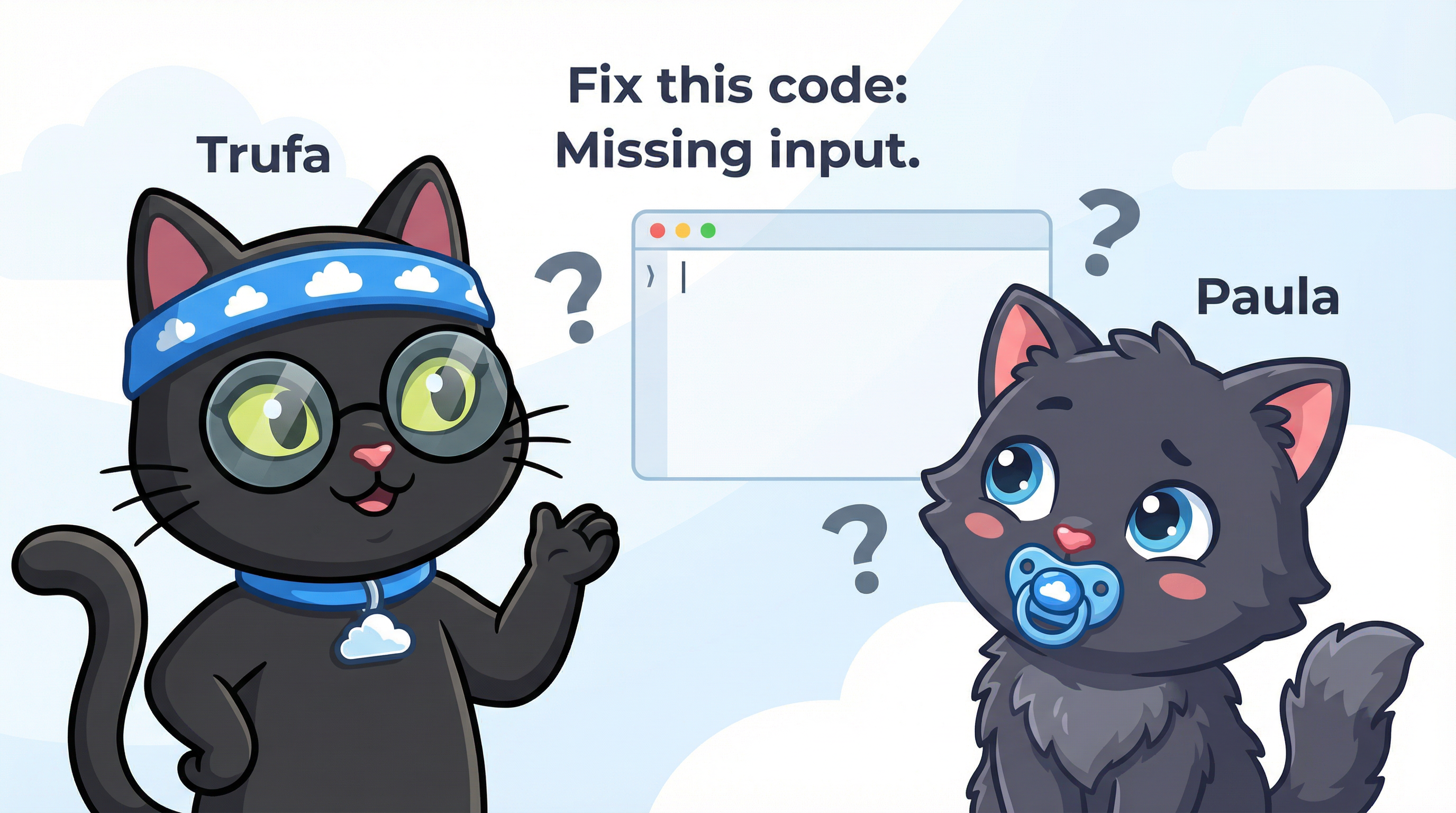
Prompt: Fix this code.
Programming assistance requires the actual code, information about the error or issue, and context about what the code is supposed to do. This prompt provides none of these elements.
Leonardo's Prompt Anatomy:
❌ No code provided - What code needs fixing?
❌ No error messages or symptoms described - How is the code failing?
❌ No expected behavior explained - What should the code do when working correctly?
❌ No programming language specified - What language is the code written in?
❌ No environment details included - What system, dependencies, or constraints are relevant?
Without the code itself and information about the problem, the AI can only provide generic debugging advice rather than specific solutions.
Leonardo Says: "Asking to 'fix this code' without sharing the code is like asking a mechanic to repair your car over the phone without describing the problem or even the make and model. Even the most advanced AI needs to see the actual code and understand the specific issues before it can help."
WHY CONTEXT MATTERS: THE IMPORTANCE OF DETAILED PROMPTS
![Leonardo the AI Fox holding a magnifying glass, examining prompt details]
Now that we've seen examples of insufficient prompts, let's understand why providing context and detail is so crucial when working with AI systems:
1. AI Has No Inherent Context
Unlike humans, who bring a lifetime of experiences and common sense to every conversation, AI systems only have access to the information you explicitly provide in your prompt (plus their training data). They can't see your screen, don't know your personal history, and can't infer your intentions unless you state them clearly.
2. Ambiguity Breeds Ambiguity
When your prompt contains ambiguous elements, the AI must make assumptions to fill in the gaps. These assumptions may not align with your expectations, leading to responses that miss the mark. The more precise your prompt, the more precise the response.
3. AI Systems Are Powerful But Not Mind Readers
Modern AI systems can generate human-like text, solve complex problems, and create impressive content—but they can't read your mind. What seems obvious to you might not be obvious to the AI, especially when it comes to your specific goals and preferences.
4. The Quality Correlation
There's a direct correlation between the quality of your prompt and the quality of the AI's response. A vague, one-line prompt might get you a technically correct but unhelpful response. A detailed, well-structured prompt is much more likely to produce the results you're looking for.
5. Efficiency Through Clarity
While it might seem faster to write a short, vague prompt, this approach often leads to a cycle of clarifications and refinements that wastes time. Starting with a clear, detailed prompt is actually more efficient in the long run.
Leonardo Says: "Think of prompt engineering as a form of translation—you're translating your human needs into a format that an AI system can understand and act upon effectively. The clearer and more complete your translation, the better the results."
TURNING BAD PROMPTS INTO GOOD ONES
Let's revisit our first example and see how we can transform it from an insufficient prompt into an effective one:
Bad Prompt:
Write a story.
Improved Prompt:
Write a 500-word science fiction short story about a botanist who discovers a plant with unexpected properties on a space station. The story should have a surprising twist ending and be written in a style similar to Ted Chiang. The target audience is adult science fiction enthusiasts.
Notice how the improved prompt addresses all the missing elements we identified earlier:
- Genre: Science fiction
- Length: 500 words
- Characters: A botanist
- Setting: A space station
- Plot elements: Discovery of a plant with unexpected properties, twist ending
- Style: Similar to Ted Chiang
- Audience: Adult science fiction enthusiasts
This level of detail gives the AI clear parameters to work within, dramatically increasing the chances that the resulting story will meet your expectations.
CHAPTER SUMMARY
In this chapter, we've explored common examples of insufficient prompts and why they fail to produce useful results. We've learned that:
- Vague prompts force AI systems to make assumptions that may not align with your intentions
- Providing context, specificity, and detail is crucial for effective communication with AI
- There's a direct correlation between prompt quality and response quality
- Well-crafted prompts save time and lead to more satisfying results
In the chapters that follow, Leonardo will guide you through the principles and techniques of effective prompt engineering, building on this foundation to help you master the art and science of communicating with AI systems.
Leonardo Says: "Remember, when it comes to prompt engineering, clarity is kindness—both to the AI and to yourself. The more clearly you communicate your needs, the better the AI can serve them."
TECHNICAL PATH PREVIEW
In the next chapter, we'll dive into the computational linguistics behind prompt interpretation, exploring how different AI architectures process and respond to prompts at a technical level.
PRACTICAL PATH PREVIEW
In the next chapter, we'll explore a simple framework for constructing effective prompts, with practical templates you can adapt for various use cases.
EXERCISES: YOUR TURN

- Take one of the bad prompts from this chapter and transform it into a detailed, effective prompt.
- Identify three prompts you've used with AI systems in the past that could be improved, and rewrite them with greater specificity.
- Practice explaining to a friend or colleague why "Write a story" is an insufficient prompt, and what elements would make it more effective.
KEY TERMS
- Prompt Engineering: The practice of designing and refining inputs to AI systems to achieve desired outputs.
- Context: Background information and specifications that help the AI understand your requirements.
- Ambiguity: Lack of clarity that forces the AI to make assumptions about your intentions.
- Specificity: The level of detail and precision in your prompt.
About the author
I'm technologist in love with almost all things tech from my daily job in the Cloud to my Master's in Cybersecurity and the journey all along.
Comments
Join the discussionNo comments yet. Be the first to comment.


